
Blood Pressure Monitors
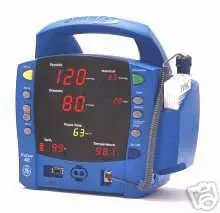
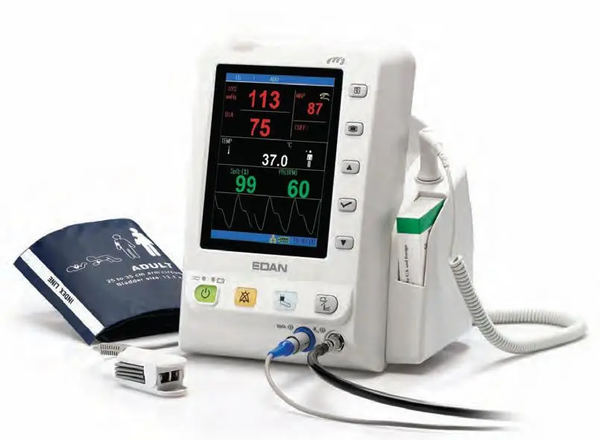
Buying a used blood pressure monitor from a reputable medical equipment dealer offers substantial savings over buying new. Our preowned blood pressure monitors are fully reconditioned and guaranteed to perform at the manufacturers original specifications. We carry a large selection of portable, bedside and pole mounted vital signs monitors. Be sure you check our selection of used medical equipment and feel free to call us with any questions.



Blood Pressure Monitors Questions & Answers
Blood pressure is checked with the use of a cuff, which is inflated either manually or automatically. The inflation of the cuff cuts off blood flow and is slowly released to allow intermittent flow through the brachial artery, which gives a reading of the systolic pressure. With a manual version a technician will listen for the pulse with a stethoscope and obtain a second reading, the diastolic pressure. In an automatic cuff, there is a sensor that does this second reading, along with the first, and both readings are shown on a screen.
In a hospital, emergency, or professional setting, a fast and accurate blood pressure reading is critical and could be a matter of life and death. An automatic blood pressure monitor eliminates the chance of human error. Manual monitors are dependent on the skill of the technician, and readings can vary.
The most common cuff is the reusable cuff, normally made from nylon material, which is durable and easily cleaned. This cuff is used on multiple patients. The disposable cuff is gaining in popularity amidst rising concerns about infections that can be acquired in a hospital setting. These cuffs are usually manufactured from vinyl or polyester, are single or limited use, and can be found in emergency rooms, operating rooms, and intensive units and neonatal units. D-ring cuffs were developed for home use, as they are easier to apply without assistance. There are also specialty cuffs that are expressly for use in ambulatory or exercise stress-testing environments. They have an elastic sleeve that stays in place during extended movement.
Technology has brought many improvements to blood pressure monitoring. Automatic monitors take readings quickly and accurately. Ambulatory monitors are lightweight and allow for long periods of movement. Wireless technology can transmit information and data to remote locations and interface with electronic medical records. In addition, blood pressure monitors are often packaged as part of vital signs monitors, which measure several vital signs.
Professional blood pressure monitors can cost thousands of dollars when purchased new. Used monitors, by comparison, can be substantially less. Just be sure that your reconditioned monitor is from a reputable dealer and is guaranteed. It's a great option if you are a startup office or clinic on a tight budget.