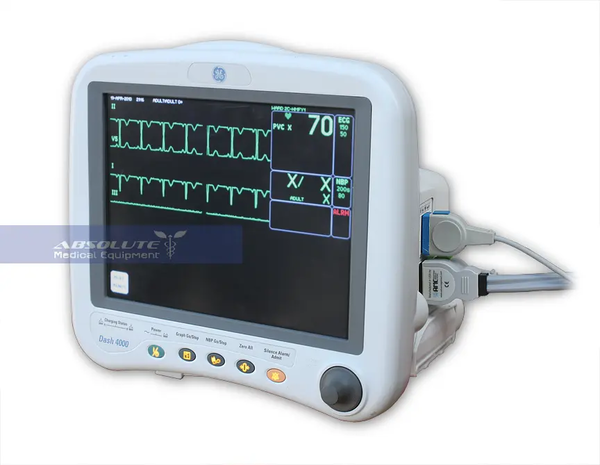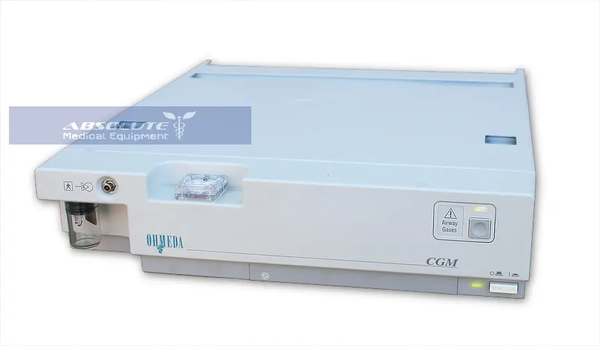
All procedures that involve
anesthesia require reliable anesthesia monitors to maintain patient safety.
There are several types of anesthesia monitors and related medical equipment in
use. The choice of appropriate monitoring equipment depends on the type of
cases to be performed in a particular setting.
Anesthesia monitors can be
characterized as devices that primarily monitor the delivery of substances
(gases, drugs and fluids) to the patient, or instruments that measure and
display the physiological state of the patient. These devices may be part of a
multivariable monitor, an anesthesia machine / anesthesia
workstation, or a separate console. Alarms
incorporated into monitoring systems detect and alert to out-of-range variables
or conditions.
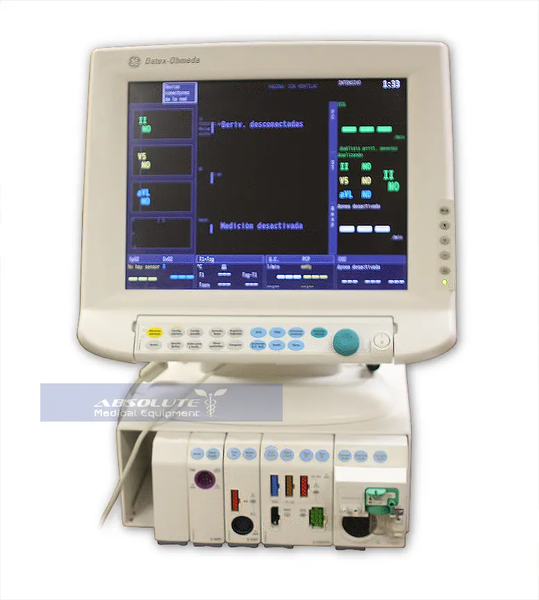
All procedures that involve
anesthesia require reliable anesthesia monitors to maintain patient safety.
There are several types of anesthesia monitors and related medical equipment in
use. The choice of appropriate monitoring equipment depends on the type of
cases to be performed in a particular setting.
Anesthesia monitors can be
characterized as devices that primarily monitor the delivery of substances
(gases, drugs and fluids) to the patient, or instruments that measure and
display the physiological state of the patient. These devices may be part of a
multi-variable monitor, an anesthesia machine / anesthesia
workstation, or a separate console. Alarms
incorporated into monitoring systems detect and alert to out-of-range variables
or conditions.
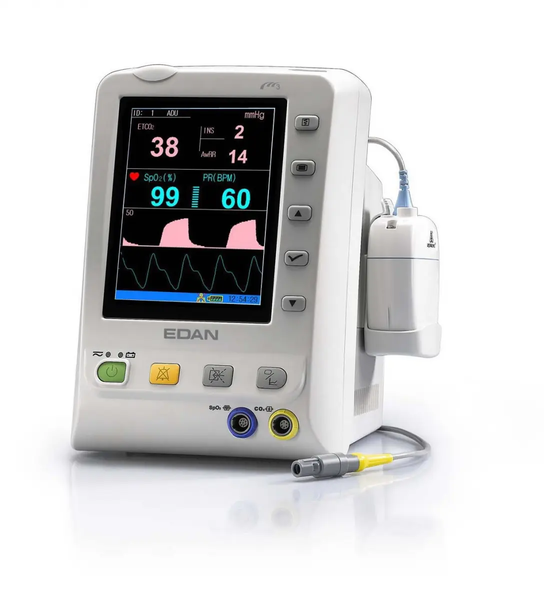
According
to clinical practice standards such as the American Society of
Anesthesiologists (ASA) Standards for Basic Anesthetic Monitoring, the
patient’s oxygenation, ventilation, circulation and temperature must be
continually evaluated during all anesthetics. Absolute Medical offers
anesthesia monitors to meet all these patient monitoring requirements.
Oxygenation
During all anesthetics, a
quantitative method of assessing blood oxygenation such as pulse oximetry must
be used. During every administration of general anesthesia using an anesthesia
machine, the concentration of oxygen in the inspired gas must be measured.
Measurement of the concentration of the anesthetic gases is recommended. Absolute
Medical carries a range of patient monitors that include pulse oximeters, and
other instruments such as those with 5-agent gas monitoring capability, which
provide identification and quantification of O2, CO2,N2O, halothane, isoflurane, sevoflurane, desflurane, and
enflurane.
Ventilation
Every
patient receiving general anesthesia must have continual monitoring for the
presence of expired carbon dioxide; quantitative monitoring of the volume of
expired gas is strongly encouraged. For patients with endotracheal intubation,
continual end-tidal carbon dioxide analysis must be performed using a
quantitative method such as capnography. Absolute Medical carries a range of monitors
including those with capnography capability.
Circulation
Every
patient receiving anesthesia must have an electrocardiogram (ECG, EKG) continuously
displayed and have arterial blood pressure and heart rate determined and
evaluated at least every five minutes. Absolute Medical carries a range of ECG
/ EKG machines and blood pressure monitors. Blood pressure monitors include
non-invasive and invasive (e.g., pulmonary artery pressure, central venous
pressure) methods.
Temperature
To
aid in the maintenance of appropriate body temperature during all anesthetics, every
patient receiving anesthesia must have temperature monitored when clinically significant
changes in body temperature are intended, anticipated or suspected. Absolute
Medical carries a range of monitors that include temperature assessment.
The anesthesia monitor equipment
available from Absolute Medical provides comprehensive clinical assessment,
reliably evaluating all these vital functions and more. Buying a used Anesthesia Monitor from a reputable
medical equipment dealer offers substantial savings over buying new. Absolute
Medical carries a large selection of anesthesia
monitors in every price range.
A standard patient monitor normally tracks vital signs, such as NIBP (non-invasive blood pressure), SPO2 (oxygen saturation in the arteries), and temperature. Higher end monitors can have added features that monitor EKG (electrocardiogram), IBP (invasive blood pressure), CO2 (carbon dioxide), and 5 agent gas.
The difference is really the setting where these monitors are utilized. Anesthesia monitors are simply patient monitors that are used during surgery to track the patient’s vital signs, such as blood pressure and temperature, while they are under sedation in the operating theater. Patient monitors, on the other hand, are used in pre- or post-op settings, such as the recovery room.
It all depends on the monitor that you purchase, but technology has definitely progressed in this area. Recently, manufacturers have started to include either ethernet ports or wireless features to allow monitors to interface with EMR and transfer information from the monitor to the records.
Quite often, the patient monitors that are used in hospital settings are monitored by nursing stations. Normally, monitors do not talk to one another, however many telemetry (automated transmission) monitors allow for patient data to be sent to nursing stations wirelessly.
Unfortunately, most monitors are not compatible with MRI machines. Supply companies such as Datascope and Invivo are among the very few that sell monitors with this compatibility.
Features such as EKG, NIBP, and temperature typically require no calibration. On the other hand, CO2 and anesthetic gases need to be calibrated with the appropriate calibration gas approximately every 60-90 days. This calibration is a critical maintenance practice.
The most basic NIBP and SPO2 monitors can be purchased for under $1000. Anesthesia monitors are more costly, and they typically run between $5500 to $8500. Cost can vary, depending on features such as CO2 and gas agents monitoring.