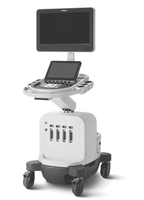
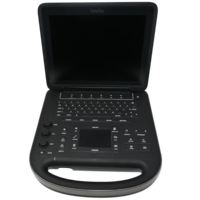
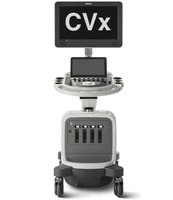
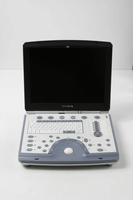
The Philips Sparq ultrasound system is designed for point-of-care imaging in emergency medicine, critical care, regional anesthesia, and pain medicine. Its mobile cart and compact footprint help position the system around the patient, while an intuitive control interface supports clinicians who need to begin an examination promptly and manage imaging functions at the bedside.
Sparq replaces a conventional bank of knobs and buttons with a sealed, tempered-glass control panel. Its dynamic interface changes with the selected task, and Simplicity Mode presents frequently used functions with fewer controls on screen. Philips pairs this approach with automated image adjustment, guidance tools, and a range of compatible probes for different point-of-care examinations.
Key Features
- Easy-to-clean control surface: the sealed glass panel is designed to simplify cleaning and disinfection between examinations, following Philips' instructions.
- Simplicity Mode: a simplified interface displays commonly used functions, helping operators concentrate on the examination and patient.
- AutoSCAN: automatically identifies tissue characteristics and adjusts image gain continuously during scanning.
- Needle visualization: enhances the appearance of a needle while retaining the surrounding tissue image, with compatible probes and supported settings.
- Procedure orientation: selected probes provide centerline references, while on-screen grid and depth guides help with target positioning.
- Imaging technologies: SonoCT compound imaging and XRES processing help reduce artifacts and image noise; supported releases also accept selected PureWave probes.
- Examination workflow: the Exam Dashboard, temporary patient identifiers, and optional SmartExam protocols support examination setup and repeatable acquisition.
- Connected documentation: DICOM networking and optional compatible reporting integrations support image sharing and examination records.
Clinical Applications
Depending on probes and enabled applications, Sparq can support abdominal and lung imaging, focused assessment with sonography for trauma (FAST), cardiac assessment, vascular access, arterial and venous examinations, superficial and musculoskeletal imaging, and nerve visualization. Philips also documents compatible TEE and pelvic applications. For procedural use, choose a configuration that matches the intended vascular access, regional anesthesia, or pain-management workflow.
Philips Sparq Specifications and Capabilities
| System format | Mobile cart-based point-of-care ultrasound |
|---|
| Main display | 17-inch monitor on an articulating arm |
|---|
| Display positioning | Independent monitor/system height adjustment; fold-down capability |
|---|
| Control panel | Sealed tempered glass with dynamic touch controls |
|---|
| Transducer connections | Three ports with fast switching between compatible connected probes |
|---|
| Mobility | Four independent wheels, 360° handling access, and cable management |
|---|
| Power management | Battery operation and sleep mode; battery condition and runtime vary by unit |
|---|
| Image processing | SonoCT, XRES, and AutoSCAN on supported configurations |
|---|
| Guidance tools | Needle visualization and compatible centerline/grid references |
|---|
| Example compatible probes | C6-2, L12-4, S4-2, C9-4v, and additional release-compatible probes |
|---|
| PureWave options | C5-1, S5-1, and X7-2t on supported releases; verify software and probe compatibility |
|---|
| Data connectivity | DICOM networking; wireless and reporting options depend on installed configuration |
|---|
Bedside Workflow and Configuration
The adjustable monitor helps accommodate different bed heights and operator positions. The compact cart and cable catch organize the workspace when other equipment surrounds the patient, and battery operation can support movement between examination locations. Battery performance on a pre-owned system should be assessed for the intended working pattern.
Ask Absolute Medical to confirm the included probes, installed software, available Doppler modes, and guidance functions required for your examinations. If remote reporting is needed, confirm the compatible third-party software, licenses, and network arrangement; Telexy Qpath integration is an optional workflow described in Philips materials. Request the unit's condition, accessory list, warranty terms, and delivery details with your quotation. The brochure describes model capabilities and options rather than the exact contents of every pre-owned system.
Manufacturer Brochures